

A mesothelioma diagnosis can show up decades after you served…and that time gap can make everything feel confusing. If you’re one of many veterans with mesothelioma, you may be juggling symptoms, appointments, and a big question: What support is actually available, and where do I start?
This page walks you through practical next steps without pressure. You’ll learn why asbestos was widely used in ships, bases, vehicles, and equipment because it resisted heat and fire…and how that can matter for today’s diagnosis and care planning. You’ll also find a clear overview of VA benefits that may help with treatment and related support, plus what information is helpful to gather about your service history and possible exposure.
After you read the VA benefits section, consider a quick eligibility check to see what options may fit your situation.
We’ll also cover other financial aid resources, a short list of questions to ask your healthcare provider, common FAQs, and a simple checklist of next steps so you can move forward one decision at a time.
Introduction to Mesothelioma for Veterans
A diagnosis of mesothelioma can be daunting, particularly for veterans who face the challenges linked to military asbestos exposure. Remember, support is available, and you are not alone.
This guide aims to help veterans with mesothelioma and their families find clear answers regarding potential asbestos exposure during military service…encounters often happening on ships, bases, or during vehicle maintenance. Here, you’ll learn about essential resources, including:
- VA health care and benefits that assist with treatment and travel costs.
- Simple explanations of asbestos trust funds and other financial options.
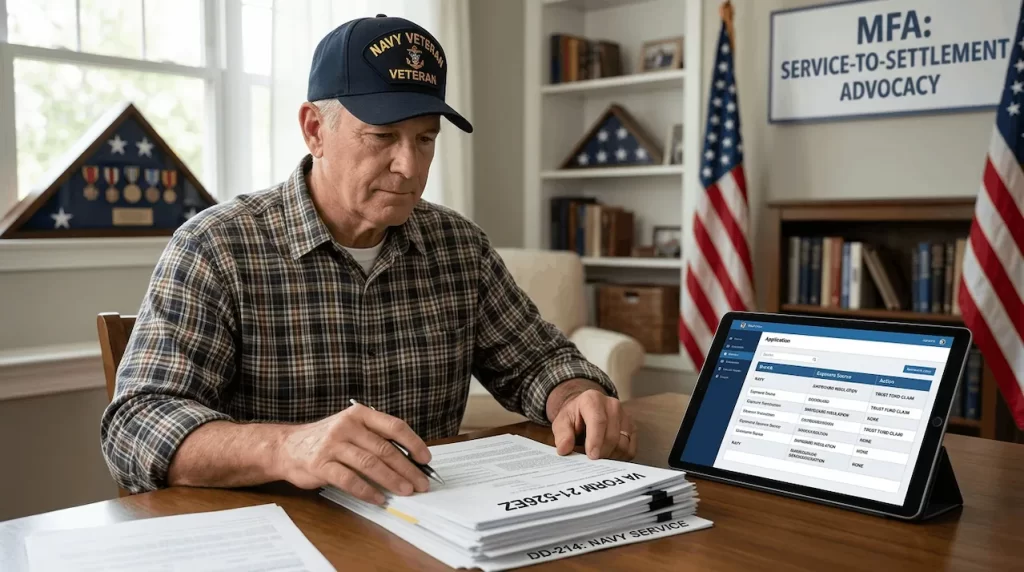
- How to compile your service and work history, crucial for accessing both VA benefits and legal options.
Next, we’ll outline the initial steps to navigate this challenging circumstance more effectively, including options for support and resources available to you.
Explore our detailed overview of VA benefits and support options for veterans.
Understanding Mesothelioma and Its Connection to Military Service
If you are a veteran facing a mesothelioma diagnosis, it can feel overwhelming and confusing, especially if your service ended years ago. Mesothelioma is a cancer most often linked to asbestos exposure, which many military jobs involved without adequate warnings at the time. Asbestos was commonly used in military applications for insulation and fireproofing, leading to significant health risks for service members. Remember, you are not alone in this journey; there are resources available to empower you.
How Can Asbestos Exposure Occur During Service?
Asbestos was used in military settings due to its resistance to heat and fire. It was often found in critical areas where insulation and durability were essential.
- Ships and shipyards: (engine rooms, boiler rooms, pipe insulation)
- Aircraft and vehicles: (brake pads, gaskets, insulation)
- Barracks and base buildings: (floor tiles, ceiling materials, older construction)
- Maintenance work: that disturbed old insulation or panels
What Does This Mean for Your Diagnosis and Care?
Mesothelioma can take decades to manifest, meaning symptoms may arise long after your discharge. Sharing your exposure history with your doctor is crucial; it can guide testing, referrals to specialists, and treatment planning that may help you feel more supported. Additionally, veterans affected by asbestos exposure can explore various options for VA benefits and compensation that may significantly impact your journey. Don’t hesitate to reach out for assistance with VA benefits and financial aid – taking this step can truly make a difference. For more information on the risks and compensation options available, see our guide on military asbestos exposure.
Navigating VA Benefits for Veterans with Mesothelioma
If you’re a veteran diagnosed with mesothelioma, remember that you have resources available through VA health care and other earned benefits. While the system may seem complex, understanding the documentation required can empower you to approach your diagnosis confidently.
What VA benefits may help with mesothelioma?
Many veterans benefit from a mix of tailored services. Key available benefits include:
- VA health care (covering appointments, imaging, surgery, chemotherapy, and appropriate symptom management)
- Disability compensation, often rated at 100% disabling for mesothelioma, qualifying veterans for the highest monthly compensation
- Travel reimbursement for qualifying medical trips to ensure you receive necessary care
- Caregiver and home-based support, such as home health services or assistance with daily tasks
Consider contacting a Patient Advocate who can perform an eligibility check and guide you on which benefits to pursue first, especially since additional aid may be available if your illness limits daily activities.
What information do you typically need to apply?
The VA typically requires clear documentation to link your diagnosis to your service history. Important items include:
- Diagnosis records (such as pathology reports, imaging notes, or letters from your oncologist)
- Service records (like your DD-214 and any duty assignments)
- Exposure details (including job rating, ship/base, timeframe, and tasks related to insulation, pipes, brakes, or boilers)
It’s natural to feel concerned about applying for benefits affecting others, but these are resources you’ve earned. Getting organized early can make your process smoother and less daunting. For further insights on the claims process, please refer to our guide on VA mesothelioma claims.
Financial Aid and Resources for Veterans
A diagnosis of mesothelioma can be daunting for veterans, creating confusion about the financial assistance available. Fortunately, there are many financial aid options tailored to veterans that can be utilized alongside your medical treatment.
What types of financial support might be available?
Your eligibility for these resources often hinges on your service history and exposure circumstances. Many veterans start by investigating VA benefits, which may include disability compensation and health care, then explore additional programs that help with travel, bills, or caregiving needs.
Soft next step: You can check eligibility with a Patient Advocate to find the best options for your situation.
- VA healthcare and disability benefits for qualifying veterans
- Asbestos trust funds set up for those affected by asbestos exposure
- Grants from organizations dedicated to supporting cancer patients and their caregivers
- State-specific assistance (for travel, home care, or temporary disabilities…varies by state)
- Social Security programs (SSDI or SSI, depending on work history and income)
Common concern: “Will this reduce my VA benefits?”
Many veterans worry that receiving additional compensation could affect their established benefits. However, in most situations, VA healthcare and disability benefits remain intact, while other need-based programs might impose income limits. A Patient Advocate can clarify these aspects, ensuring you get the support you deserve.
Veteran-focused support organizations
You can also connect with VA-accredited claims representatives, local Veterans Service Organizations (VSOs), and hospital social workers who offer essential resources for transportation, lodging, and caregiver support. Additionally, specialized VA treatment centers provide tailored assistance for veterans navigating complex claims related to asbestos exposure. Remember, you are not alone in facing this challenge.
Questions to Ask Your Healthcare Provider about Mesothelioma
Receiving a mesothelioma diagnosis can be overwhelming, particularly for veterans who may be uncertain about their exposure history and available treatment options. Bringing a list of questions can empower you, ensuring that your care team understands your specific needs and concerns. While mesothelioma is often viewed as terminal, there are treatments available that may help to extend life and enhance quality of living. It’s crucial to seek care from a multidisciplinary cancer center where specialists can collaborate on a personalized treatment plan.
What should I ask about my diagnosis and next steps?
Seek clear, straightforward information, and don’t hesitate to ask your provider to repeat or write down important details for clarity.
- What type of mesothelioma do I have, and where is it located?
- What tests confirmed it, and do I need more imaging or biopsies?
- What does stage mean in my case, and how does it influence my treatment options?
How do we choose treatment, and what side effects should I plan for?
Treatment options may involve surgery, chemotherapy, radiation, or immunotherapy, often in combination. Ask which options align with your health and personal goals.
- What treatment options are best for me, and why?
- What side effects should I expect, and how can we manage symptoms like nausea, fatigue, or shortness of breath?
- Who can I contact after hours if my symptoms change?
Are there clinical trials or VA-connected resources for veterans?
If you’re a veteran, it’s essential to inquire about clinical trials, referrals to mesothelioma specialists, and how to coordinate care with the VA. Remember, you’re not alone in this journey; consider reaching out to a Patient Advocate for support in organizing your records and reviewing eligibility for benefits.
Frequently Asked Questions about Mesothelioma for Veterans
What financial aid options are available for veterans diagnosed with mesothelioma?
If you’re a veteran facing the challenges of a mesothelioma diagnosis, know that you are not alone. There are empowering resources available to help you navigate this journey. A crucial first step is to gather your service history and any known asbestos exposure details, as this information will be vital in accessing support.
Here are some key options to consider for financial aid and support:
- VA health care (including specialty care and travel assistance in some cases)
- VA Disability Compensation for service-connected illnesses
- VA Dependency and Indemnity Compensation (DIC) for eligible surviving spouses
- Asbestos trust funds (distinct from VA benefits)
- Social Security Disability (SSDI) or Medicare, if eligible
If you need assistance determining which options are right for you, consider reaching out to a Patient Advocate. They can provide a free eligibility check and outline your next steps.
How can I determine my eligibility for VA benefits related to mesothelioma treatment?
To begin, confirm these three essentials: you are a Veteran, you have a mesothelioma diagnosis, and you may have experienced asbestos exposure during your service. Your eligibility for benefits often hinges on the connection between your exposure and military duties, even if symptoms developed years later.
Before applying or seeking help, gather the following items:
- DD-214 (or other discharge papers)
- Pathology report or doctor’s note confirming your mesothelioma diagnosis
- A simple service history (including jobs, ships, bases, and dates)
- Information on any civilian work exposure (if applicable)
If you’re uncertain about your eligibility, consider a free eligibility check with a Patient Advocate or a VA-accredited representative. They can also assist you in exploring health care enrollment and service-connected disability options.
What resources can assist veterans and their families in managing a mesothelioma diagnosis?
You have various options for both medical care and practical support. Many veterans begin their journey with the VA for healthcare coverage, referrals, and assistance in coordinating treatment with specialists.
Engaging with a Patient Advocate can be incredibly beneficial. They can clarify your eligibility for financial aid and benefits while helping you compile necessary records. If you wish, you can also check eligibility for support programs tailored to your diagnosis and service history.
Common resources include:
- VA benefits (covering care, disability compensation, caregiver support)
- Accredited Veterans Service Officers (VSOs) to assist with claims paperwork
- Asbestos trust funds (providing financial support in certain situations)
- Social Security Disability and local transportation or home-care services
- Support groups through cancer centers or nonprofits for both patients and caregivers
Next Steps for Veterans Facing Mesothelioma
A simple plan you can follow
Getting a mesothelioma diagnosis can be overwhelming for veterans, but remember, you are not alone. Our priority is to empower veterans like you, offering access to essential resources that support your health and household.
Next steps for navigating this diagnosis often include:
- Consult your doctor to get referred to a mesothelioma specialist or cancer center experienced with veterans’ needs.
- Gather essential documents: diagnosis records, your DD-214, and a brief job/exposure history to establish your eligibility for benefits.
- Explore VA benefits and financial aid options that assist with care, travel, and treatment related to your diagnosis.
- Connect with a Patient Advocate who can help verify your eligibility for compensation and resources, including asbestos trust funds specifically for veterans.
- Request support: access counseling, caregiver resources, and symptom management services designed for veterans.
If you’re unsure where to start, make one call this week…reach out to your VA team, your clinic social worker, or a Patient Advocate. Taking that first step is vital. Check your eligibility for benefits today. Call 800-763-9692.
Medical Disclaimer: Information is for educational purposes only and is not medical advice. Always consult a qualified physician.
Legal Disclaimer: Information is for educational and informational purposes only. No attorney-client relationship is formed by viewing content or submitting forms.
Compensation Disclaimer: Any amounts mentioned are examples and not guarantees; compensation varies by case. Use “potential,” “estimated,” or “average.”