

A Comprehensive Guide to Exposure History, Clinical Evidence, and Fund Claims
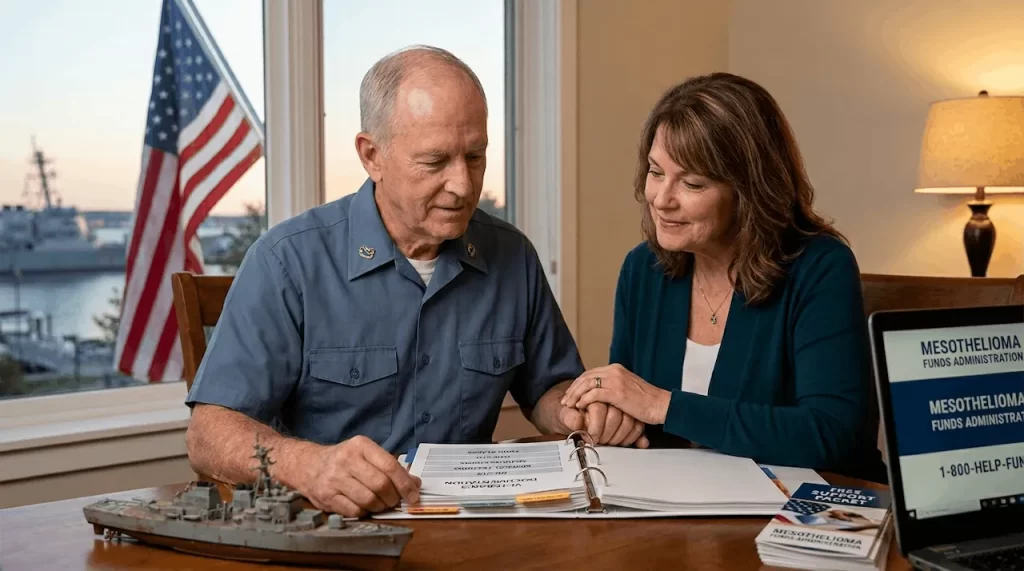
A mesothelioma diagnosis can feel like a sudden, heavy weight, especially for those who have spent their lives in service to our country. If you or a loved one are facing this diagnosis, the most important thing to know is that you are not alone, and you are not without options.
The military has a long history with asbestos, and while the manufacturers of these materials may have failed to protect you, a $30 billion trust fund system was established specifically to provide for veterans in your exact position. At Mesothelioma Funds Administration, our goal is to simplify the administrative path so you can focus on your health and your family.
1. Connecting Your Service to Your Health
The first step after a diagnosis is often the most personal: understanding how this happened. Mesothelioma takes decades to develop, meaning the exposure likely occurred during your time in uniform.
We look at military service through a regulatory lens to help you identify “Presumptive Exposure.” If you served in these environments, the system already recognizes the high likelihood of asbestos contact:
- Navy Vessels & Shipyards: From boiler rooms to hull insulation, sailors and shipyard workers faced significant exposure during routine maintenance and overhauls.
- Army & Marine Corps Infrastructure: Asbestos was used in vehicle brake linings, gaskets, and even the building materials of older base housing.
- Air Force Maintenance: Specialized heat shields and engine insulation often contained high levels of asbestos fibers.
The Administrative Path: You don’t need to have a perfect memory of every product you touched. Your Military Occupational Specialty (MOS), ship hull numbers, or base assignments are the primary tools we use to document your history.
| Branch of Service | Primary Exposure Source | Key Documentation Required |
|---|---|---|
| U.S. Navy | Propulsion plants, boiler rooms, gaskets, and insulation. | Hull Numbers, Sea Service Records, or Shipyard assignments. |
| U.S. Army | Vehicle brake linings, clutches, and base housing materials. | MOS (e.g., 63B Mechanic), Base location, and Unit history. |
| U.S. Marine Corps | Amphibious assault vehicles and structural fireproofing. | Deployment records and specialized MOS documentation. |
| U.S. Air Force | Aircraft engine heat shields and cockpit insulation. | Airframe types (e.g., C-130, B-52) and maintenance logs. |
| Coast Guard | Engine room maintenance and cutter overhauls. | Cutter names and specific duty station assignments. |
2. The “Clinical Blueprint” for Support
To ensure your family receives the maximum level of support, your medical records must be organized into what we call a “Clinical Blueprint.” This isn’t just paperwork; it is the evidence of your sacrifice.
According to our Senior Medical Reviewer, Dr. Marcelo C. DaSilva, a successful claim requires specific medical markers to trigger the highest payout levels from asbestos trusts:
- The Biopsy Confirmation: Trusts require a formal pathology report confirming malignant mesothelioma.
- Specialist Documentation: A diagnosis from a mesothelioma-specific oncologist carries more weight in the administrative process than a general cancer report.
- The Service Link: A medical narrative that connects your clinical diagnosis to your documented military history.
Identifying Secondary Service-Connected Conditions
Mesothelioma is often the primary diagnosis, but many Veterans suffer from secondary conditions caused by the same asbestos exposure. Documenting these can strengthen your overall VA rating:
- Asbestosis: Scarring of the lung tissue that often precedes or accompanies mesothelioma.
- Pleural Effusion: Fluid buildup around the lungs, a common symptom that requires specific diagnostic coding (ICD-10) for your claim.
- COPD and Respiratory Distress: While not always caused by asbestos, these conditions are often aggravated by mesothelioma and can be factored into a “combined rating” by the VA.
3. Securing Your Family’s Future: VA vs. Trust Funds
For a newly diagnosed veteran, “financial support” usually means two different things. It is important to understand how they work together to protect your legacy:
- VA Disability Benefits: Because the VA typically views mesothelioma as 100% disabling, you may be eligible for the highest tier of monthly compensation to help with daily care and treatment costs.
- Asbestos Bankruptcy Trusts: These are private funds created by the companies that manufactured the asbestos used by the military. These funds exist outside of the VA system, and filing for one does not typically reduce your eligibility for the other.
How the PACT Act Changes the Filing Process
The Honoring our PACT Act of 2022 is the most significant expansion of Veteran benefits in decades. For mesothelioma claimants, it provides a vital safety net:
- Expanded Presumptive Locations: If you served in specific locations (like Guam or American Samoa) or were exposed to burn pits, the “burden of proof” for a service connection is significantly lowered.
- Retroactive Benefits: If you were previously denied a claim for a respiratory condition, the PACT Act may allow you to reopen that claim with the new “presumptive” status, potentially resulting in back-dated compensation.
- The Timeline: Filing under the PACT Act is time-sensitive. Establishing your intent to file immediately protects your effective date for benefit payments.
4. A Veteran’s Documentation Checklist
When you are ready to take the next step, start by gathering these four essential items. This “Administrative Binder” is the foundation of your claim:
- DD-214: Your proof of service and discharge status.
- Pathology Report: The formal diagnosis from your biopsy.
- Service History: A list of ships, bases, or specialized job roles (MOS) you held.
- Specialist Contact Info: A list of the doctors currently managing your care.
Frequently Asked Questions for Veterans
- Q: Can I file a claim if I was a smoker?
- A: Yes. While smoking complicates general lung cancer cases, it is medically proven that smoking does not cause mesothelioma—asbestos is the only known cause. Your smoking history should not disqualify you from VA benefits or trust fund settlements.
- Q: What if the company that made the asbestos is out of business?
- A: This is exactly why the Asbestos Trust Funds were created. Even if a manufacturer is bankrupt, the money is set aside in a trust specifically to pay claims to Veterans.
- Q: How long does the average claim take?
- A: While VA claims can take several months, “Expedited Claims” are available for Veterans with terminal diagnoses like mesothelioma to ensure they receive support within weeks rather than years.
Moving Forward with Confidence
While the path following a diagnosis is challenging, these administrative steps are designed to provide the financial stability your family deserves. While this site provides the information and data summaries you need, our sponsor, Danziger & De Llano, LLP, acts as the legal engine to ensure your claims are handled with the urgency and precision they require.
Medical Disclaimer: Information is for educational purposes only and is not medical advice. Always consult a qualified physician.
Legal Disclaimer: Information is for educational and informational purposes only. No attorney-client relationship is formed by viewing content or submitting forms.
Compensation Disclaimer: Any amounts mentioned are examples and not guarantees; compensation varies by case. Use “potential,” “estimated,” or “average.”