

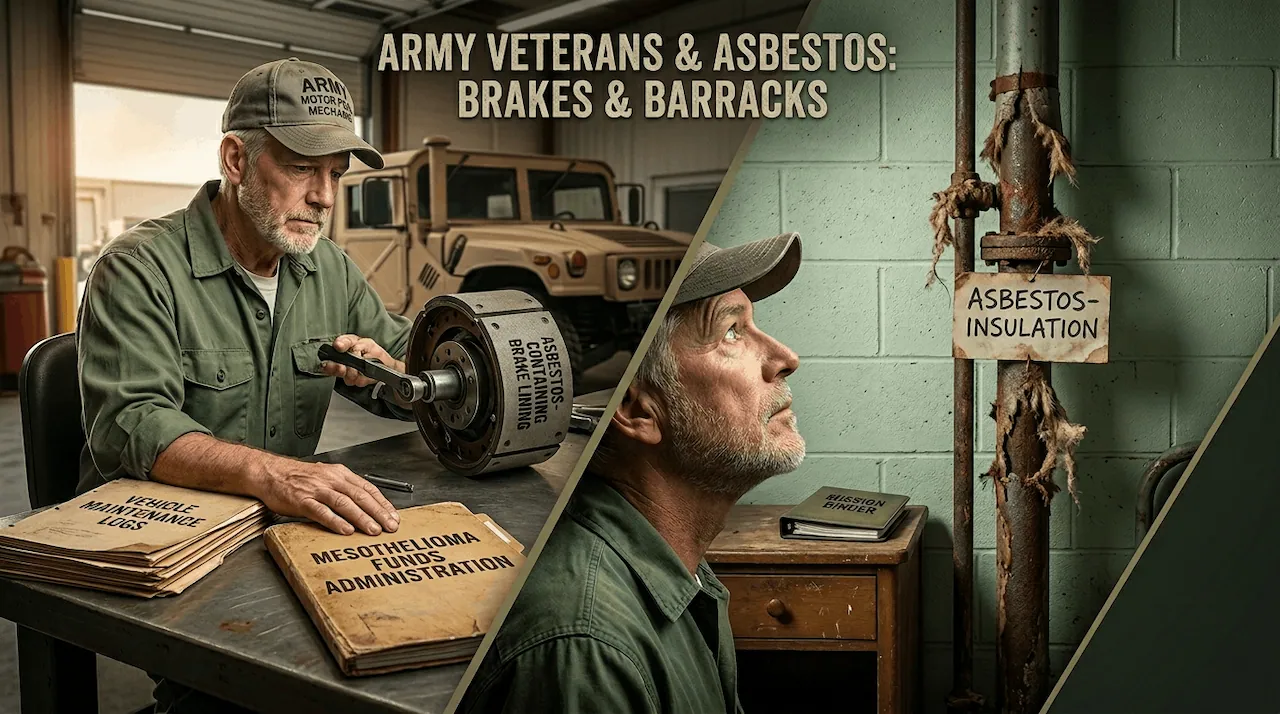
While naval history often dominates the conversation around asbestos, thousands of soldiers who served in the United States Army were exposed to the same toxic mineral on solid ground. From the vehicles they maintained in the motor pool to the barracks where they slept, asbestos was a constant, quiet presence in military life for decades. For these veterans, a mesothelioma diagnosis can feel like a secondary battle, one fought long after their active duty service ended.
At the Mesothelioma Funds Administration, we recognize that Army service came with unique environmental risks that are often overlooked. Understanding exactly how and where you were exposed is the first step toward securing the medical care and financial stability your family needs. If you are ready to explore your options, you can begin the process to verify your Army veteran asbestos exposure and access specialized support today.
Ground Force Risks: Understanding Army Mesothelioma Exposure Sites
Asbestos was prized by the military for its fireproofing and heat resistance. In the Army, this meant the mineral was integrated into almost every piece of infrastructure. Unlike the Navy, where exposure was often confined to ships, Army exposure occurred across sprawling bases and in specialized transport units. The most common risk factors involved regular contact with friction materials, gaskets, and building insulation used in standard military construction.
Soldiers served in environments where microscopic fibers were frequently released into the air during routine maintenance or simply by living in aging facilities. Because these fibers are odorless and invisible, many veterans remained unaware of the danger for thirty or forty years. Today, identifying these specific locations is essential for building a successful claim for benefits.
The Motor Pool Danger: Brake Linings and Tactical Vehicles
One of the most significant sources of asbestos exposure in the Army was the maintenance of tactical vehicles. Mechanics and motor pool personnel worked daily with parts that required extreme heat resistance. Brake linings, clutches, and engine gaskets manufactured prior to the late 1980s were almost universally made with asbestos. When these parts wore down or were sanded during repair, they created a fine toxic dust that filled the garage bays.
If your service involved working on Jeeps, heavy transport trucks, or armored vehicles, you likely inhaled high concentrations of these fibers. This type of occupational exposure is a primary factor in mesothelioma cases for Army veterans. To learn more about how these records impact your filing, see our guide on organizing service records for mesothelioma claims.
“Asbestos was used in more than 300 different products in the U.S. Army, including insulation in buildings and automotive parts like brake linings and clutch faces. Veterans who performed maintenance on these components are at an increased risk of developing asbestos-related diseases.” — U.S. Department of Veterans Affairs
Living Quarters and Infrastructure: Asbestos in the Barracks
Exposure was not limited to those with mechanical job ratings. Many soldiers were exposed in the very places they lived and ate. Military barracks, mess halls, and administrative buildings were constructed using asbestos-containing materials (ACMs) in floor tiles, ceiling tiles, and pipe insulation. Steam pipes, which provided heat to drafty barracks, were often wrapped in asbestos blankets that would fray and deteriorate over time.
When these buildings underwent renovation or experienced routine wear and tear, the asbestos became friable, meaning it could easily be crumbled into dust. Soldiers sleeping in these quarters or working in mess halls were subject to long term, low level exposure that is just as dangerous as high level industrial exposure. This “bystander exposure” is a significant factor in current mesothelioma treatment and compensation eligibility logic.
High-Risk Army MOS: Did Your Job Lead to Exposure?
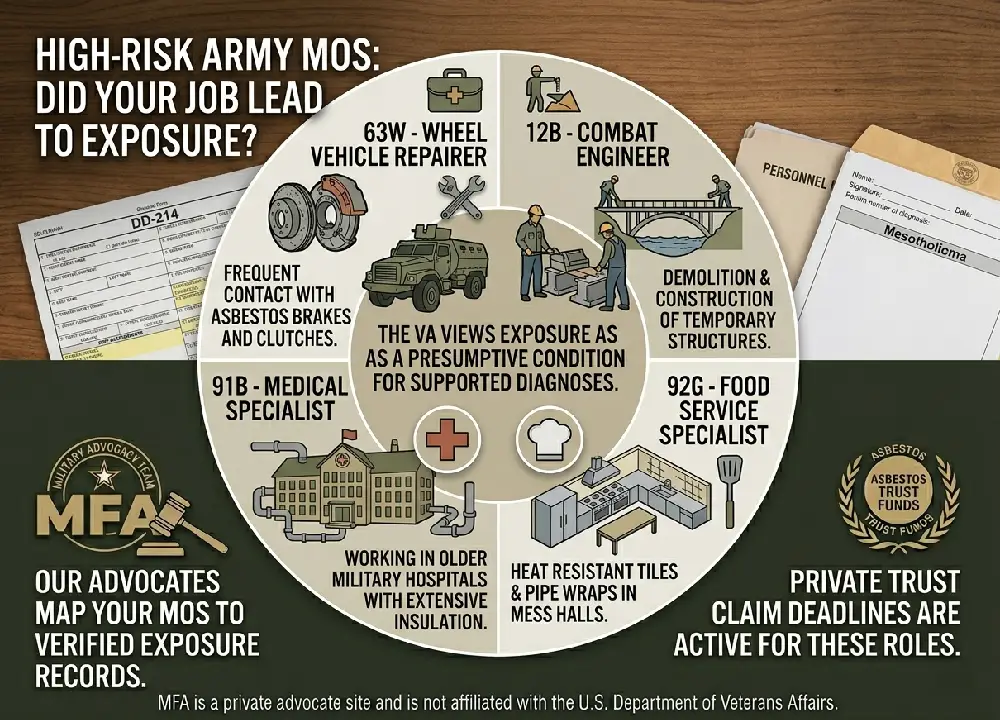
While any veteran could have been exposed, certain Military Occupational Specialties (MOS) are considered high risk due to the nature of the work. If you served in one of these roles, the VA often views your exposure as a presumptive condition, provided you have the medical evidence to support the diagnosis:
- 63W – Wheel Vehicle Repairer: Frequent contact with asbestos brakes and clutches.
- 12B – Combat Engineer: Involved in demolition and construction of temporary structures.
- 91B – Medical Specialist: Working in older military hospitals with extensive pipe insulation.
- 92G – Food Service Specialist: Exposure to heat resistant tiles and pipe wraps in mess halls.
Taking Command of Your Health and Benefits in 2026
In 2026, the process for filing an Army asbestos claim has become more streamlined, but the burden of proof regarding your job site remains. You must be able to link your diagnosis to your time in service with specific details. This is why “parallel processing” your VA claim alongside private trust fund applications is vital. By acting quickly, you ensure that you are not missing out on the financial support intended for your care.
Conclusion: Protecting the Legacy of Our Soldiers
Army veterans are known for their resilience and their commitment to the mission. When facing a mesothelioma diagnosis, that same mindset is required to navigate the complex world of benefits and medical care. From the motor pools of Fort Hood to the barracks of overseas bases, the history of asbestos in the Army is a difficult one, but it is a history that grants you the right to seek justice. Do not let the “wait and see” approach stop you from claiming what you earned.
If you or a loved one are navigating life after an Army mesothelioma diagnosis, contact the Mesothelioma Funds Administration today. We are here to help you map your exposure and secure your family’s future.
Army Exposure Statistics: Research provided by the National Academies of Sciences indicates that during peak years of asbestos use, nearly all military housing and maintenance facilities built before 1980 contained significant amounts of asbestos in flooring, roofing, and thermal insulation.
Medical Disclaimer: Information is for educational purposes only and is not medical advice. Always consult a qualified physician.
Legal Disclaimer: Information is for educational and informational purposes only. No attorney-client relationship is formed by viewing content or submitting forms.
Compensation Disclaimer: Any amounts mentioned are examples and not guarantees; compensation varies by case. Use “potential,” “estimated,” or “average.”