

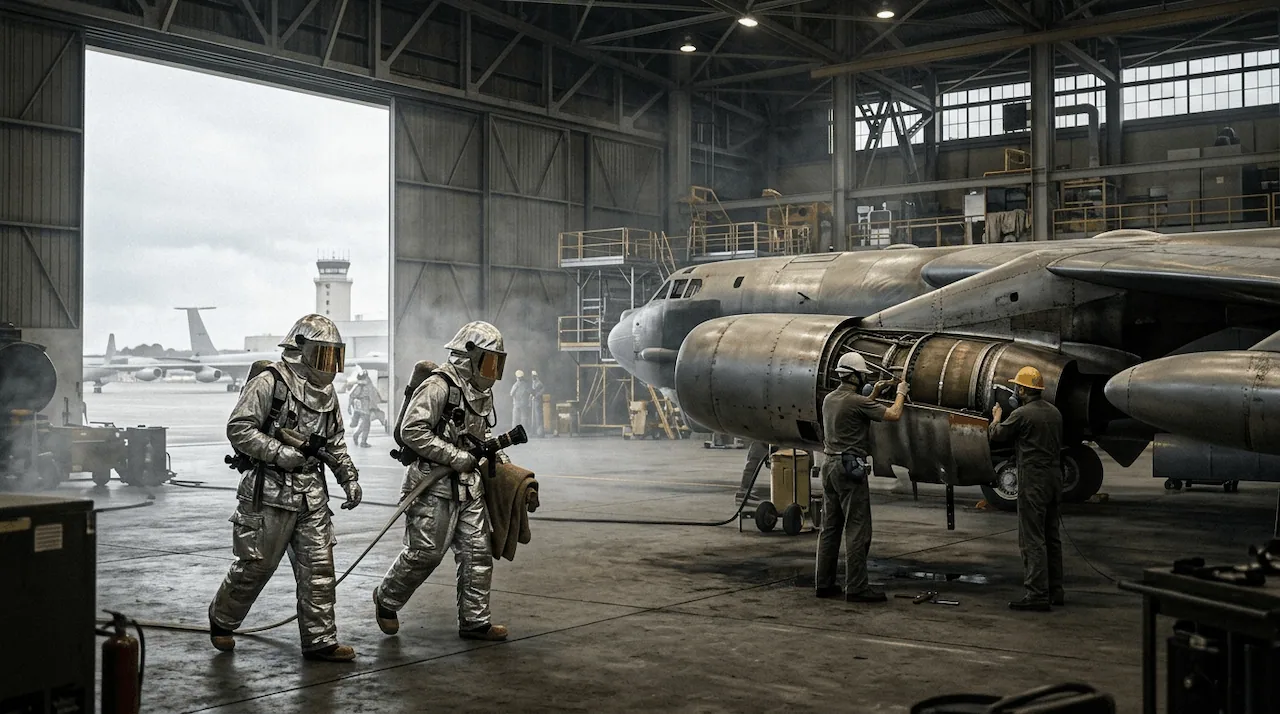
For decades, members of the U.S. Air Force worked in environments where asbestos was considered an essential component for heat resistance, particularly during the high-tempo operations of the Cold War and Vietnam Era. From the insulation lining massive aircraft hangars to the very suits worn by crash rescue teams, the risk of inhaling toxic fibers was a daily reality. If you served as an Air Force mechanic or fire protection specialist, understanding the link between your service and potential illness is the first step toward securing your future. Air Force Veterans with mesothelioma may be eligible for both VA disability benefits and private asbestos trust fund settlements.
Asbestos in Air Force Aircraft Hangars and Maintenance Facilities
During the Cold War, Air Force hangars were designed to withstand extreme temperatures and prevent the spread of fire. Unfortunately, this meant heavy reliance on asbestos-containing materials (ACMs). Airmen working in maintenance, structural repair, or facility management often encountered asbestos in:
- Pipe insulation and boiler gaskets in hangar heating systems.
- Roofing materials and corrugated siding on base structures.
- Vinyl floor tiles and acoustic ceiling panels in briefing rooms and alert shacks.
- Electrical wiring insulation found in hangar workshops.
When these facilities underwent repairs or renovations, microscopic asbestos fibers were released into the air. Without the stringent respiratory protection standards of today, Airmen inhaled these fibers, leading to a long-term risk of developing mesothelioma or asbestos-related lung cancer decades later.
Engine Heat Shields and Mechanical Exposure Risks
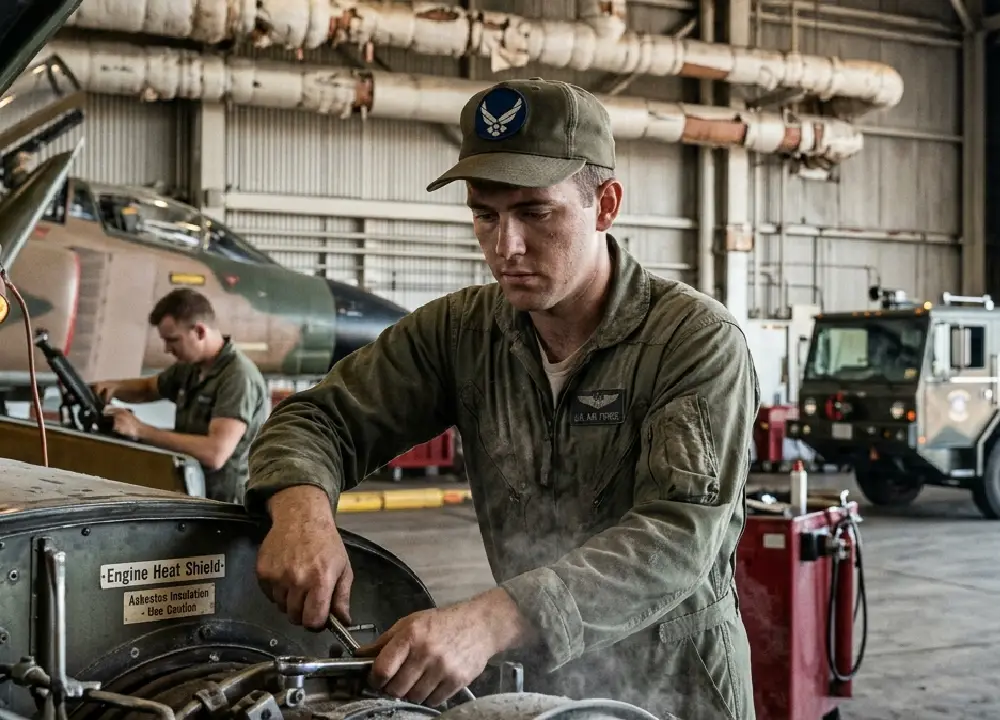
The primary source of exposure for Air Force mechanics involved the aircraft themselves. Cold War-era jet engines generated immense heat, requiring robust insulation. Asbestos was frequently used in engine heat shields, gaskets, and brake assemblies. Crew chiefs and propulsion specialists who performed “tear-downs” of engines often disturbed brittle asbestos insulation, creating a cloud of toxic dust in confined hangar spaces.
“Asbestos was used in many different types of equipment in the Air Force, including aircraft, vehicles, and buildings. Because of its heat resistance and durability, it was often used in engine heat shields, brakes, and insulation.”
Fire Protection Specialists: The Risk of Fire-Retardant Suits
Air Force Fire Protection Specialists (AFSC 3E7X1) and crash rescue teams during the Vietnam Era faced unique risks. To protect these Airmen from the extreme heat of jet fuel fires, their proximity suits, often called “silver bullets,” were manufactured using woven asbestos cloth. Paradoxically, the gear designed to save their lives from fire often exposed them to the silent danger of asbestos.
As these suits aged or became damaged during drills, the asbestos fibers would fray and become airborne. Furthermore, the fire-retardant blankets used during that era often contained asbestos additives. This exposure was often concentrated and repetitive, making fire protection one of the highest-risk occupations for service-connected mesothelioma.
Secondary Exposure and Hangar Personnel
It was not just the mechanics and firefighters at risk. Administrative personnel, supply clerks, and those working in proximity to the flight line could suffer secondary exposure. Asbestos dust often settled on the uniforms of mechanics, which was then carried into shared spaces, barracks, and even back home to families, a phenomenon known as take-home exposure.
VA Disability Claims vs. Private Asbestos Trust Fund Settlements
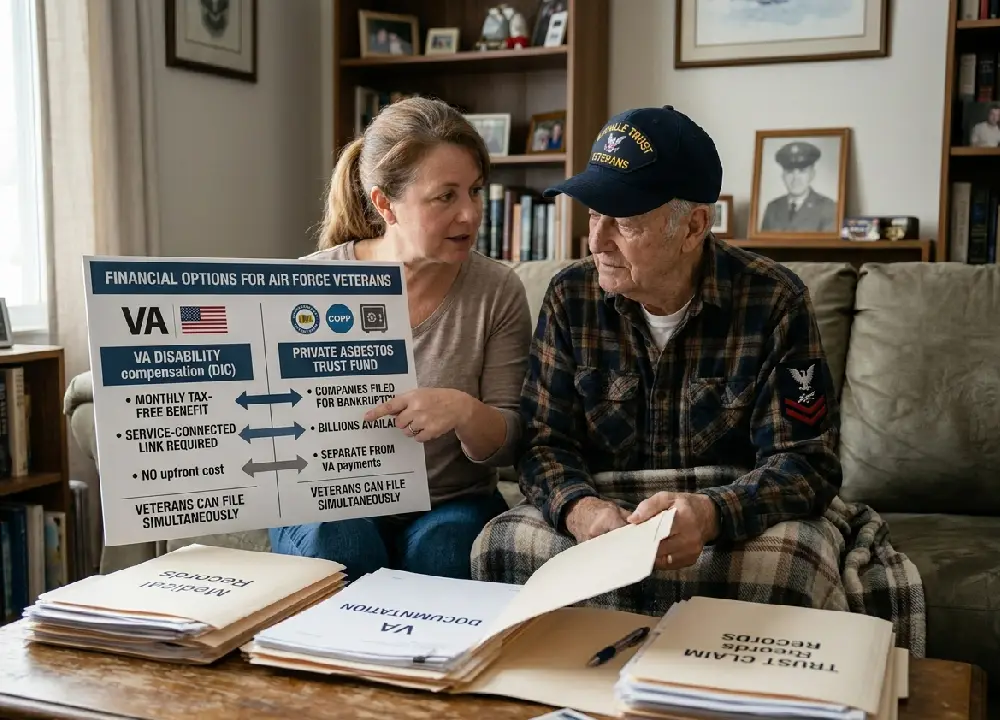
Air Force Veterans diagnosed with an asbestos-related condition often find themselves navigating two distinct paths for financial recovery. It is important to distinguish between government benefits and private legal claims.
1. VA Disability Compensation (DIC): This is a monthly tax-free benefit provided to Veterans with a service-connected illness. To qualify, you must prove that your exposure during Air Force service is “at least as likely as not” the cause of your mesothelioma. You can find comprehensive directories of legal resources at the Mesothelioma Lawyer Center.
2. Private Asbestos Trust Funds: These funds were established by the companies that manufactured the asbestos products used by the Air Force. These companies filed for bankruptcy to handle their liabilities, and billions of dollars remain available for claimants. These settlements are separate from your VA rating and do not reduce your VA monthly payments. If your exposure occurred at a specific industrial site in Texas or elsewhere, Dandell provides specialized regional expertise for these jurisdictional claims.
How to File a Service-Connected Mesothelioma Claim
Filing for benefits requires a clear “nexus” or link between your Air Force duties and your diagnosis. For aircraft mechanics, this involves detailing the specific airframes worked on, such as the C-130, B-52, or F-4, and the frequency of exposure in hangars. For firefighters, documentation of training exercises and the use of protective gear is critical.
At Mesothelioma Funds Administration, we specialize in helping Air Force Veterans bridge the gap between their military service and the compensation they deserve.
Service Statistic: According to data regarding military asbestos exposure, Veterans represent approximately 30% of all mesothelioma deaths in the United States, highlighting the heavy concentration of asbestos in military applications throughout the 20th century.
Author: Larry Gates, Veteran Advocate SME
Medical Disclaimer: Information is for educational purposes only and is not medical advice. Always consult a qualified physician.
Legal Disclaimer: Information is for educational and informational purposes only. No attorney-client relationship is formed by viewing content or submitting forms.
Compensation Disclaimer: Any amounts mentioned are examples and not guarantees; compensation varies by case. Use “potential,” “estimated,” or “average.”