

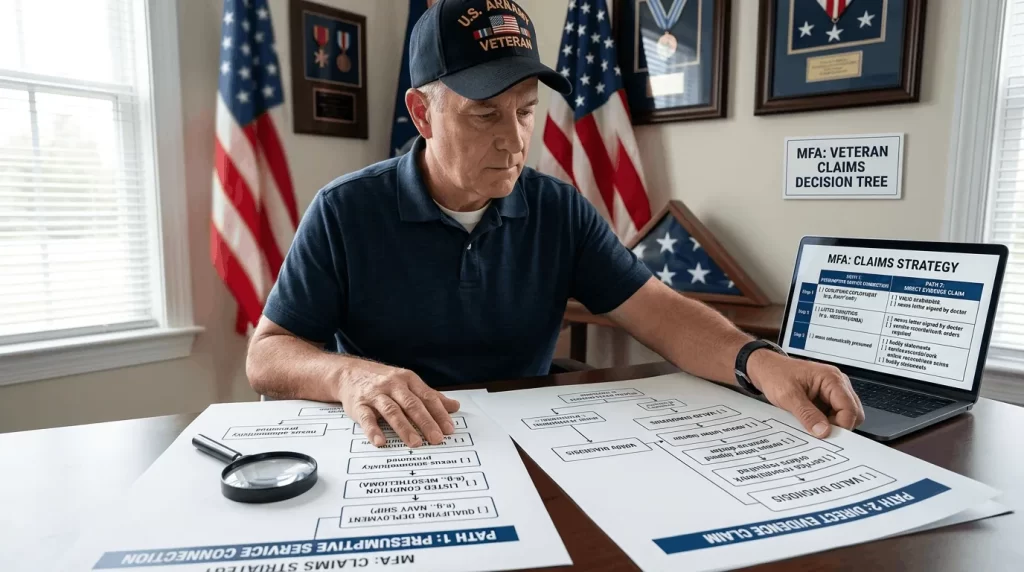
Not all VA service connection is proven the same way. If you’re stuck between Presumptive Service Connection vs. Direct Evidence, you’re not alone…and the difference can shape what records you need and how hard you may have to document your claim.
Here’s the pressure point: many veterans assume they must “prove everything” with detailed medical and service paperwork. In reality, presumptive service connection is a VA rule that can make qualifying easier for certain conditions tied to where you served, when you served, or what exposures may have occurred. On the other hand, direct evidence generally relies on connecting your current condition to your service through medical records, service history, and supporting documentation.
Below, you’ll get a clear breakdown of what “presumptive” means, what still has to be shown even with a presumption, and what counts as direct evidence in a claim. You’ll also see a side-by-side comparison, answers to common questions, and practical next steps for moving forward with your VA benefits claim.
Understanding the Concepts: What to Know
asbestos exposure during military service is the canonical resource this guide references. Visit the hub for the full step-by-step walkthrough and printable checklists.
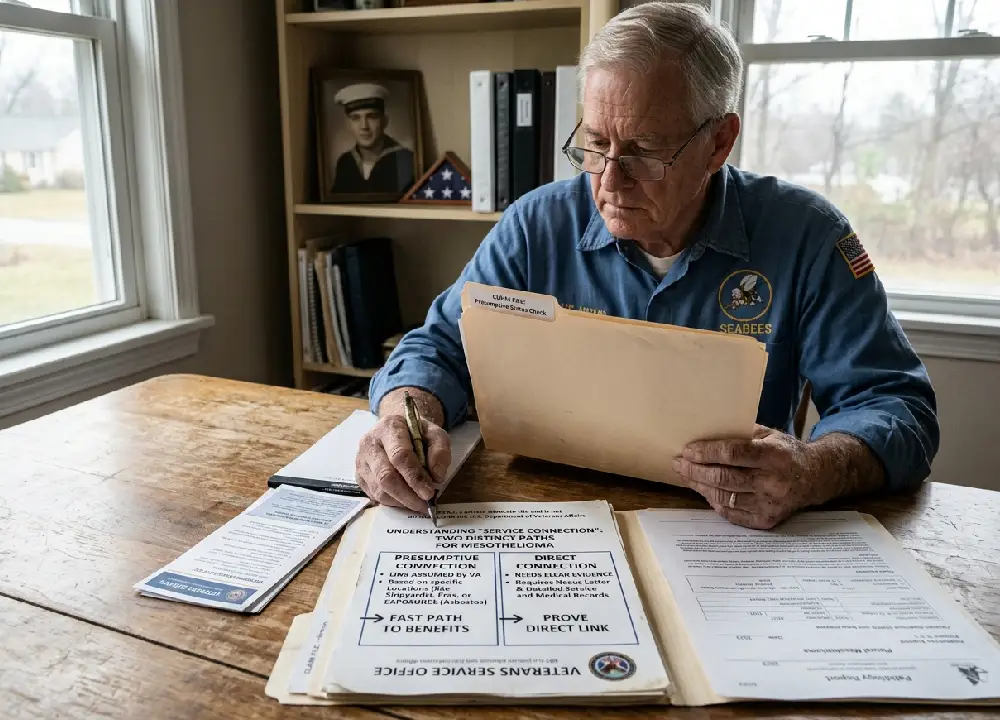
If you’re a veteran navigating the VA claims process, understanding the difference between presumptive service connection and direct service connection is essential. These terms represent two distinct paths to establish that your health condition is related to your military service.
Presumptive service connection allows the VA to assume a link based on specific criteria, such as certain locations, time frames, or exposures. For instance, diseases like mesothelioma are classified as presumptive illnesses due to asbestos exposure, enabling veterans to access benefits more quickly without needing to prove a direct link. In contrast, direct service connection requires clear evidence, including medical records and supporting documentation, to demonstrate this link.
After reviewing the following section, you can understand your eligibility and determine which claim type aligns with your circumstances. Consider the following:
- Example: A job at a shipyard with documented asbestos exposure may support a direct claim.
- Common concern: While it’s natural to worry about having “perfect” paperwork, a clear timeline and consistent details are often sufficient.
Defining Presumptive Service Connection
Presumptive service connection is a vital VA rule designed to ease your path to benefits. Instead of requiring you to present extensive proof of how your condition developed, the VA may “presume” that your health issue is linked to your military service if you meet specific eligibility criteria based on your service history. This approach is especially relevant for conditions like mesothelioma, which the VA recognizes as presumptive due to asbestos exposure during service, allowing veterans to access benefits more promptly.
This framework is beneficial as it can reduce the burden of paperwork and the need for extensive medical “link” evidence, especially for conditions that arose from exposures that occurred many years ago or when records are challenging to obtain. By streamlining the claims process, veterans can receive essential financial and healthcare support without unnecessary delays.
What counts as a “presumptive” condition?
Presumptions depend on the specifics of where you served, when you served, and the exposures you may have encountered. The VA updates its lists of qualifying conditions periodically; therefore, it’s vital to verify what currently applies to your situation. For instance, conditions like certain cancers, including those linked to asbestos, are acknowledged under these guidelines.
Examples of qualifying conditions under VA presumptive categories (depending on your service) may include:
- Certain cancers associated with specific exposures
- Respiratory illnesses related to environmental hazards
- Chronic conditions that manifest within a designated timeframe after discharge
What you still need to show
A common misconception is that “presumptive” guarantees automatic approval. Typically, you still need to provide:
- A current diagnosis (supported by medical records)
- Qualifying service details (such as DD-214, unit assignments, dates of service, and duty locations)
If you’re uncertain whether your diagnosis qualifies for a presumptive service connection, consider reaching out to a Patient Advocate. They can assist you in organizing your service and medical documentation before you submit your claim.
Understanding Direct Evidence in Claims
If your condition isn’t on the VA’s “presumptive” list, you can still pursue a claim by providing direct evidence that establishes a service connection between your health issue and your military service. This often includes gathering essential documentation such as your service records and medical history, which are crucial for substantiating your claim.
Need assistance with your records? It’s important to understand your eligibility and consult with a Patient Advocate about the critical documentation you’ll need to support your claim. For instance, obtaining a confirmed diagnosis and filing the appropriate VA forms can significantly streamline the process. Check your eligibility now!
What counts as direct evidence?
Direct evidence consists of the necessary paperwork and statements that demonstrate three key elements: you have a diagnosis, an event occurred during your service that could explain it, and a medical link between the two. Here’s what you’ll need:
- Medical records detailing your diagnosis, symptoms, and treatment history
- Service records including your MOS, duty stations, ship assignments, or work orders
- Exposure details related to tasks involving insulation, piping, brake work, or shipyard repairs
- Buddy statements from coworkers or supervisors who can attest to the conditions you faced
How is this different from presumptive claims?
While presumptive claims can be more straightforward because the VA recognizes the service connection based on qualifying service and listed conditions, obtaining direct evidence requires you to build that connection step by step. This may seem like more effort, but with the right approach, it’s entirely manageable. As you prepare, consider creating a clear timeline of your service history and gathering all relevant documents to effectively support your case.
Comparing Presumptive Service Connection and Direct Evidence
If you are filing for VA benefits, it’s essential to understand the two primary paths: presumptive service connection and direct service connection. Each path supports your claim but requires different types of proof.
Need help determining which path suits your situation? You can understand your eligibility by consulting with a Patient Advocate, who can guide you on the critical documentation to gather next. This may include your DD214 and any relevant medical records that demonstrate your exposure history.
What does presumptive service connection mean?
Presumptive service connection means that the VA may automatically link a condition to your service based on specific criteria, such as the location and time of your service. This connection is made without needing you to prove the exact moment or source of exposure, making it particularly beneficial for veterans with incomplete records or varied exposures over time.
What does direct evidence mean?
In contrast, a direct service connection requires you to establish a clear link between your military service and your medical diagnosis. This route typically demands more detailed paperwork, including service records and medical documentation that outlines your exposure.
Quick side-by-side comparison
- Main focus: Presumptive = qualifying service + qualifying condition; Direct = evidence linking service to condition.
- What you may need: Presumptive = deployment/service records; Direct = service records + medical records + supporting statements.
- Common misconception: Not being eligible for presumptive does not mean you have “no options.” Many veterans can still pursue a direct evidence claim.
As a next step, gather your DD214, a timeline of your duties, and any pathology or imaging reports. This preparation will help you decide which path to pursue for your claim. For additional insights on navigating claims related to exposure, refer to our guide on mesothelioma compensation.
Frequently Asked Questions about Service Connection
What is Presumptive Service Connection and how does it apply to veterans?
Understanding Presumptive Service Connection is essential for veterans seeking VA benefits. This rule simplifies the claims process for certain health conditions associated with specific military exposures or service situations. Instead of needing to prove that your condition was caused by your service, you typically only need to show that you meet the VA’s service requirements and have a qualifying diagnosis.
This may apply if your illness is listed on the VA’s presumptive list, which includes conditions related to Agent Orange exposure, burn pits, or specific deployments. For instance, a veteran with qualifying Vietnam-era service and a listed condition may not need additional medical proof to establish a connection.
To navigate the next steps in your claims process, consider:
- Confirming your diagnosis is documented in your medical records
- Gathering critical service details, such as dates, locations, and unit information
- Checking if your condition appears on the VA’s presumptive lists
If you need assistance, a Patient Advocate can help you organize your records and perform a quick eligibility check.
What is Direct Evidence in the context of veteran claims?
Understanding Direct Evidence is also crucial for your VA claim. This type of evidence provides clear support for key aspects of your claim without ambiguity. Simply put, it is proof that links your condition to your military service, detailing what happened or what you were exposed to.
Common examples of direct evidence include:
- Service treatment records that document symptoms, diagnoses, or injuries incurred during service
- Military personnel records that confirm your job duties, duty stations, or assignments
- Medical records containing a definitive diagnosis and dates of treatment
- A doctor’s nexus letter stating it is at least as likely as not that your condition relates to your service
If you lack direct evidence, there may still be options available through other records and lay statements. A Patient Advocate can assist you in gathering any missing documentation and keeping everything organized.
How can I gather Direct Evidence for my mesothelioma claim?
Gathering Direct Evidence for Your Claim is vital in establishing both your mesothelioma diagnosis and the likely source of asbestos exposure. Start by collecting medical documents that clearly identify your diagnosis, such as pathology reports, imaging summaries, and notes from your doctor.
Next, compile records that link you to specific job sites, products, or buildings associated with asbestos exposure. Helpful items include:
- Work history documentation (pay stubs, W-2s, union records, job badges, training logs)
- Military records (DD-214, ship/base assignments, MOS/rating)
- Product or site evidence (old invoices, photos, manuals, maintenance logs)
- Witness statements from coworkers, friends, or family who observed dusty work environments
If you find yourself missing paperwork, don’t worry…this is common. A Patient Advocate can help you request records, organize timelines, and identify additional sources of evidence, ensuring you don’t have to navigate this process alone.
Moving Forward with Your Claim

If you’re a veteran diagnosed with an asbestos-related condition, it’s vital to understand your eligibility for VA benefits. You may qualify for a presumptive service connection or may need to submit direct evidence to support your claim. Being organized can streamline this process and increase your chances of a successful outcome.
Simple next steps you can take this week
- Gather critical documentation: This includes your diagnosis paperwork, DD-214, and any relevant job details from shipyards or military bases.
- Create a timeline: Document where you worked, the materials you encountered, and approximate dates to reinforce your claim.
- Seek assistance: Reach out to a Patient Advocate to evaluate your eligibility and navigate the claims process effectively.
You don’t have to face this journey alone. Support is available, and taking one step today can empower you for tomorrow.
Check your eligibility for benefits today. Call us at 800 – 763 – 9692.
Medical Disclaimer: Information is for educational purposes only and is not medical advice. Always consult a qualified physician.
Legal Disclaimer: Information is for educational and informational purposes only. No attorney-client relationship is formed by viewing content or submitting forms.
Compensation Disclaimer: Any amounts mentioned are examples and not guarantees; compensation varies by case. Use “potential,” “estimated,” or “average.”