

Medically reviewed by: Dr. Marcelo C. DaSilva, MD, FACS, FICS, Senior Medical Reviewer.
Clinical content reviewed by: Eleanor Ericson, RN, BSN and Lisa Hyde Barrett, RN, BSN of Nursing Liaisons.
Last reviewed: 2026-05-09. Editorial policy.
From 1940 through approximately 1980, asbestos was the standard insulation material on US Navy ships. If you served in the Navy during this period, you were almost certainly exposed. The exposure was higher in some ratings than others. It was higher on some ships than others. But baseline exposure was widespread.
This page covers where Navy asbestos exposure happened, which ratings carried the highest risk, what equipment and ship classes are best documented, and how to confirm your service-connected exposure for a VA claim.
Where asbestos was used on Navy ships
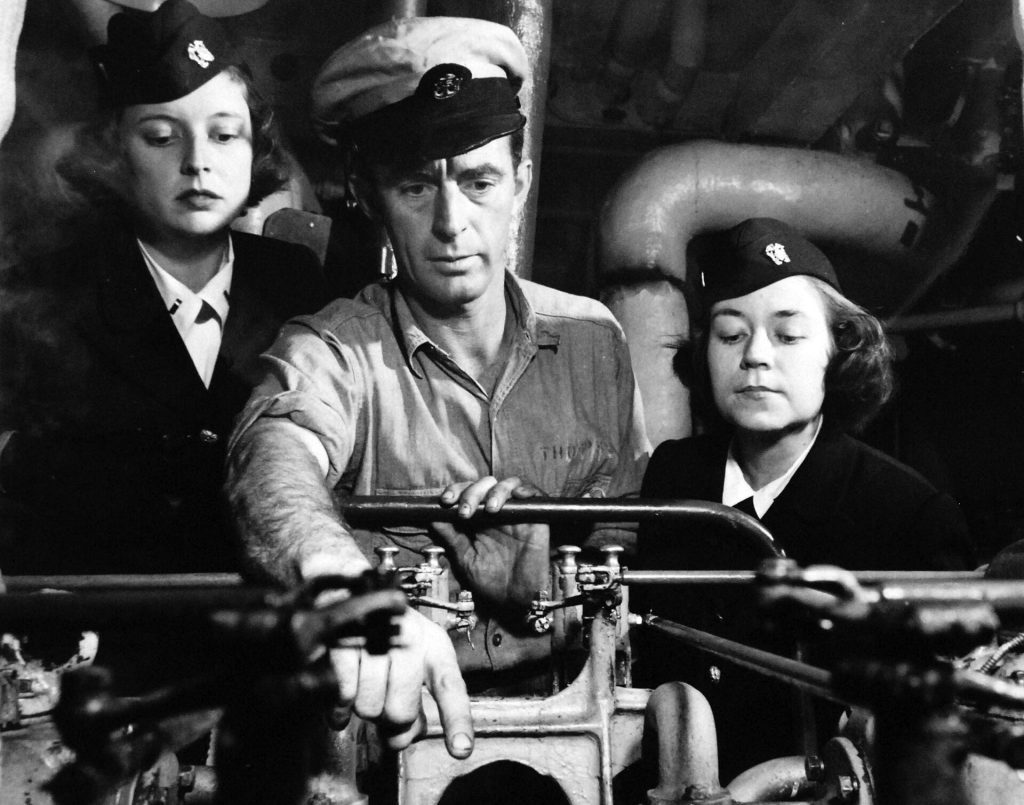
Asbestos was valued because it resisted heat and fire. On a warship, both were everywhere. The result was that asbestos appeared in virtually every space below the main deck.
- Engine rooms and boiler rooms. Pipes, boilers, turbines, pumps, and valves were wrapped in asbestos lagging or insulated with asbestos block insulation.
- Engineering spaces and machinery rooms. Electrical wiring used asbestos-impregnated cloth. Generator rooms had asbestos blankets and gaskets.
- Damage control fittings. Fire-resistant doors, bulkheads, and overhead panels often contained asbestos.
- Berthing compartments and mess decks. Floor tiles, wall panels, and ceiling tiles installed before 1980 commonly contained chrysotile asbestos.
- Shop spaces. Welding gloves, brake linings, gaskets, packing materials, and joint compounds used asbestos as a routine ingredient.
- Aircraft and aviation maintenance areas. Heat shields, brake linings, and engine components on Navy aircraft used asbestos.
The risk was highest when asbestos was disturbed: during maintenance, repair, refit, or damage control. Sailors who worked in engineering and damage control had the highest exposure. But sailors who simply lived and slept in spaces with degraded asbestos insulation also experienced low-level chronic exposure.
Navy ratings with documented high exposure
The following ratings have particularly well-documented asbestos exposure histories. If you held one of these ratings during the asbestos era (roughly pre-1980), your VA claim should not be difficult to substantiate.
- Boiler Technician (BT). Worked directly with steam plant equipment, including boilers wrapped in asbestos lagging.
- Machinist’s Mate (MM). Operated and maintained main engines, auxiliary equipment, and reduction gears in the heaviest-asbestos spaces on the ship.
- Engineman (EN). Diesel engine maintenance on auxiliaries and small boats, with asbestos exhaust insulation and gaskets.
- Pipefitter and Hull Maintenance Technician (HT). Cut, welded, and repaired piping wrapped in asbestos lagging. Some of the highest documented exposure on a ship.
- Electrician’s Mate (EM). Worked with asbestos-insulated wiring and asbestos panels in electrical spaces.
- Damage Controlman (DC). Inspected and maintained fire-resistant fittings, many of which contained asbestos.
- Aviation Boatswain’s Mate (ABE, ABF, ABH). On carriers, handled asbestos-laden flight deck equipment and aircraft components.
- Aviation Machinist’s Mate (AD). Maintained engines and brake systems on Navy aircraft.
Other ratings (Radarman, Quartermaster, Yeoman, Hospital Corpsman, etc.) had lower direct exposure but may still have served in spaces with degraded asbestos. The VA does not require that you held an engineering rating. They require evidence of plausible exposure.
Ship classes with documented asbestos
The following ship classes are particularly well-documented in VA and litigation records. If you served on one of these during the asbestos era, your exposure history is established in publicly available records.
- Forrestal-class aircraft carriers (CV-59 through CV-62, including USS Forrestal, Saratoga, Ranger, Independence)
- Kitty Hawk-class aircraft carriers (CV-63 through CV-67)
- Essex-class aircraft carriers (CV-9 through CV-21)
- Iowa-class battleships (BB-61 through BB-64)
- Cleveland-class light cruisers
- Baltimore-class heavy cruisers
- Sumner-class destroyers and Gearing-class destroyers
- Knox-class frigates
- Charles F. Adams-class destroyers
- Permit and Sturgeon-class submarines
- Lafayette-class fleet ballistic missile submarines
- Auxiliary fleet vessels: ammunition ships (AE), cargo ships (AKA), oilers (AO), repair ships (AR), submarine tenders (AS)
This is not an exhaustive list. Most US Navy ships built before 1980 had asbestos somewhere. If your ship is not listed, exposure may still be documented through ship-specific maintenance records and the National Personnel Records Center.
Shipyards with documented exposure
If you spent time in a shipyard for refit, overhaul, or new construction, your asbestos exposure was almost certainly elevated above sea-duty baseline. The shipyards with the heaviest documented exposure include:
- Brooklyn Navy Yard, NY
- Mare Island Naval Shipyard, CA
- Hunters Point Naval Shipyard, San Francisco, CA
- Long Beach Naval Shipyard, CA
- Pearl Harbor Naval Shipyard, HI
- Norfolk Naval Shipyard, Portsmouth, VA
- Philadelphia Naval Shipyard, PA
- Portsmouth Naval Shipyard, ME and NH
- Charleston Naval Shipyard, SC
- Puget Sound Naval Shipyard, Bremerton, WA
- Boston Naval Shipyard, MA
For more on shipyard-specific exposure, see Shipyard Asbestos Exposure.
How to confirm your exposure for a VA claim
You do not need to remember exact dates or specific products. You need enough evidence that the VA can connect your service to plausible asbestos exposure. Your VSO will help you assemble this. Useful items:
- DD-214. Lists your rate, ship assignments, dates, and any aviation or shipyard duty.
- Service personnel records. Available from the National Personnel Records Center at archives.gov/personnel-records-center. Request all records (medical, performance, training).
- Buddy statements. Written statements from former unit members confirming the type of work you did and the equipment you handled.
- Ship’s history. Available through the Naval History and Heritage Command at history.navy.mil. Many ships have detailed deck logs showing maintenance schedules.
- Pathology report. The pathology report confirming mesothelioma is what links the exposure to the diagnosis.
For details on how to file the VA claim, including which form, who can help you, and what to expect, see VA Benefits for Mesothelioma.
Talking with your family about Navy exposure
Many Navy veterans never told their families about life below decks. The smell of fuel oil, the heat in an engine room in summer, the noise of a steam plant under way. If your veteran is open to talking about it, listen. The exposure history you need for a VA claim sometimes emerges from these conversations rather than from official records.
For families coordinating around a Navy veteran with mesothelioma, see Support for Veteran Families.
This page was reviewed by the editorial team at Mesothelioma Funds Administration. For our editorial standards, see Editorial Policy. Sources for ship classes and ratings include the Naval History and Heritage Command, the Naval Sea Systems Command, and Department of Veterans Affairs Compensation and Pension records. Last reviewed: 2026-05-07.
Have questions about your situation?
Call to speak with someone who can point you to the right Veteran Service Officer, walk you through what evidence you need, or explain how the trust fund pathway works alongside your VA claim. There is no cost and no obligation. We do not handle your VA claim ourselves; we help families understand the parallel benefit pathways that most veterans never claim.
Call (800) 763-9692 Phone line staffed during business hours.