

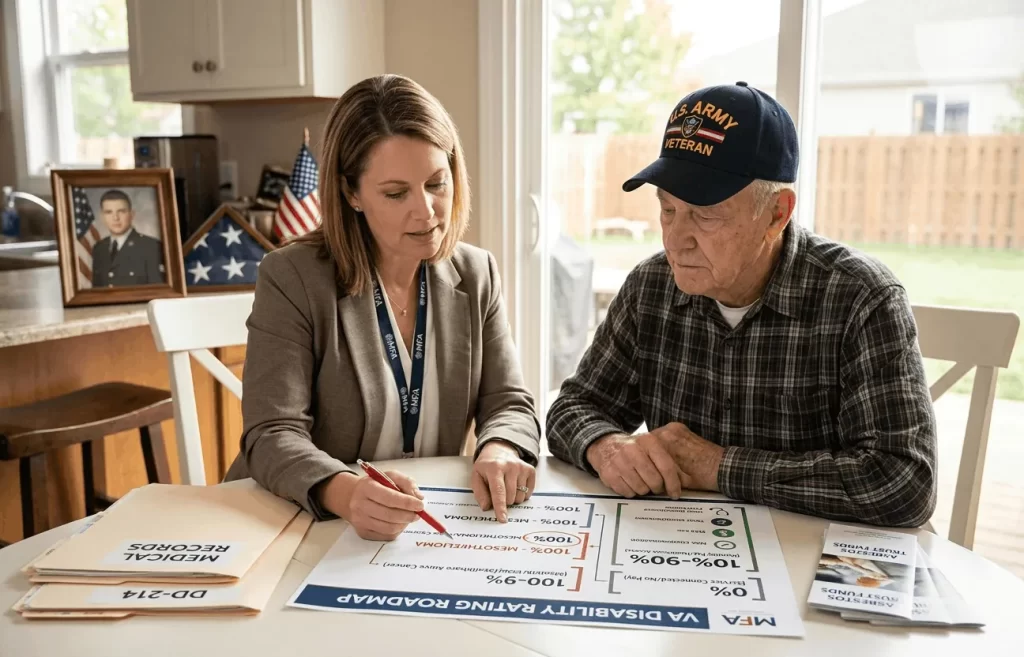
Why does one number…10%, 50%, or 100%…change what support you can get after service? VA Disability Ratings can feel confusing at first, especially when you’re already managing a health condition tied to your time in uniform.
A VA disability rating is a percentage the Department of Veterans Affairs assigns to show how much a service-connected condition affects your day-to-day life. That percentage may influence monthly compensation, access to certain VA health care options, and other benefits. If you’re unsure what the rating means, how it’s decided, or what paperwork actually matters, you’re not alone.
Below, you’ll get a clear starting point: what VA disability ratings are, what evidence the VA looks at, and how ratings connect to benefits. You’ll also find a practical overview of eligibility and the application process, plus common misconceptions that trip veterans up (like assuming a diagnosis automatically guarantees a certain percentage). Finally, we’ll close with next steps you can take if you’re preparing to apply or checking an existing rating.
Introduction to VA Disability Ratings
filing a VA claim for mesothelioma is the canonical resource this guide references. Visit the hub for the full step-by-step walkthrough and printable checklists.

If you are a veteran with a service-related health condition, understanding VA disability ratings is crucial. These ratings determine the level of support you qualify for, with significant monthly compensation tied to your rating percentage. For instance, veterans with higher disability ratings can receive substantial benefits, sometimes exceeding $3,700 monthly for severe conditions like mesothelioma.
A VA rating indicates the degree to which a condition impacts your daily life, expressed as a percentage. This percentage influences your access to monthly compensation, various VA benefits, and assistance for family needs.
What this guide helps you do
In the upcoming sections, you will learn valuable insights, including:
- How ratings are determined and the significance of scores like “0%” vs. “100%”
- Essential evidence needed, including medical records and service documentation
- Common myths, such as the possibility of working with a rating
Additionally, consider consulting a Patient Advocate for personalized guidance on your questions.
What Are VA Disability Ratings?
A VA disability rating is a percentage the Department of Veterans Affairs assigns to indicate how much a service-connected condition impacts your health and daily life. This standard measure helps the VA determine what benefits you may qualify for and their level. For example, conditions like mesothelioma are often rated at 100%, granting veterans access to the highest compensation available, along with additional support if daily activities are affected.
Ratings are typically assigned in 10% increments, ranging from 0% to 100%. Even a 0% rating confirms that your condition is service-connected, although it may not lead to monthly benefits. Generally, higher ratings correlate with increased monthly compensation and better access to various VA services, including specialized support for those with severe conditions.
How does the VA decide your rating?
The VA evaluates medical evidence and its rating schedule to align your symptoms with a percentage. Ratings may derive from:
- Medical records (including diagnoses, imaging, and lab results)
- C&P exam outcomes (Compensation & Pension exam, if appointed)
- The impact of symptoms on your work and daily activities
Why do ratings matter for benefits?
Your rating affects monthly compensation, access to specific VA health care services, and potential support for dependents. For veterans with multiple service-connected conditions, the VA employs a combined rating formula, which is more intricate than simple addition.
If you’re uncertain about your rating or its implications, consider reaching out to a Patient Advocate who can help review your letters and identify necessary documents for further steps.
How VA Disability Ratings Impact Benefits
Your VA disability rating is a percentage (0% to 100%) that reflects how much a service-connected condition affects your daily life and ability to work. That number is crucial, as it helps determine monthly compensation and what healthcare support you can access through VA benefits. For instance, veterans with conditions like mesothelioma may receive substantial monthly payments and various forms of support, emphasizing the importance of accurate ratings.
What Can Change with a Higher (or Lower) Rating?
In general, a higher rating may open the door to more financial help and broader support. However, a lower rating remains significant; it may qualify you for essential care and protect access to certain services. The VA recognizes that conditions such as asbestos-related diseases can lead to substantial benefits, including monthly compensation and healthcare at any VA facility.
Depending on your situation, your rating can affect:
- Monthly tax-free compensation (amount varies by rating and dependents).
- VA health care priority group placement and possible copays.
- Added benefits like caregiver support, travel reimbursement, or adaptive equipment (when eligible).
Ready to check your eligibility? Speak with a Patient Advocate for guidance and support.
Common Misconceptions to Watch For
“If I’m not 100%, I can’t get help.” Not true. Many veterans receive valuable benefits at ratings below 100%.
“My rating is permanent and can’t be updated.” Ratings can change if your condition worsens or new medical evidence is introduced.
How to Find Your Rating and Next Steps
You can usually view your disability rating through VA.gov or your VA decision letters. If anything looks off, consider gathering your diagnosis records, treatment history, and service details. Then, speak with a Patient Advocate about benefits and financial aid options that may help alongside VA coverage. For more information on specific conditions and their associated benefits, check our guide on mesothelioma and veterans.
Medical Disclaimer: Information is for educational purposes only and is not medical advice. Always consult a qualified physician.
Legal Disclaimer: Information is for educational and informational purposes only. No attorney-client relationship is formed by viewing content or submitting forms.
Eligibility and Application Process for VA Benefits
If you’re a veteran facing an asbestos-related illness, it’s natural to feel uncertain about the VA’s support and the application process. The good news is that VA benefits depend on your service and medical status, and many veterans can apply even if exposure occurred years ago. Veterans diagnosed with conditions like mesothelioma may qualify for VA disability compensation, which is distinct from other claims.
Need assistance with your options? It’s advisable to check your eligibility with a Patient Advocate to receive a clear plan for next steps before tackling forms. A thorough review of your work history can help establish a connection between your diagnosis and asbestos exposure.
Who may be eligible?
Eligibility hinges on factors like your discharge status, current diagnosis, and the connection between your exposure and military service. Common places of exposure include ships, shipyards, boiler rooms, vehicle repair, and construction sites.
What you’ll typically need to apply
Having your documents in order can help avoid delays. Many veterans typically prepare:
- DD-214 (or other separation documents)
- Medical records documenting diagnosis and treatment
- Service records or duty history (MOS/ratings, ship or base information)
- Exposure details: locations worked, materials handled, and dates (even rough estimates assist)
Common challenges… and how to avoid them
Two common issues faced are missing records and unclear exposure timelines. If you lack complete documentation, apply anyway and maintain an ongoing record of dates, job sites, and coworkers who might verify your work history.
After gathering the essentials, the next step is to determine the correct VA benefit path and submit your claim with consistent documentation. This approach helps ensure you receive the appropriate VA Disability Ratings. For more insights on navigating these claims, see our guide to VA mesothelioma claims.
Common Misconceptions About VA Disability Ratings
Understanding VA disability ratings can be challenging due to conflicting information online, especially from friends who mean well. Here’s clarity on common misconceptions and the realities surrounding VA Disability Ratings.
“A rating is the same as being 100% disabled.”
A VA rating represents a percentage reflecting how a service-connected condition impacts your daily functioning. This rating may not correlate with daily feelings of health. Veterans rated at various levels, including 100%, can often work while their rating remains active, similar to how conditions like mesothelioma are rated during treatment, emphasizing that a rating does not always equate to total disability.
“If my symptoms get worse, the VA will automatically increase my rating.”
Reevaluations do not occur automatically. If your condition worsens, you should request a reevaluation and submit updated medical documentation. Keeping a symptom log and notes from appointments can effectively illustrate changes in your health.
“I can’t ask questions or get help without risking my benefits.”
Seeking support is not only acceptable but wise. Engage with a VSO (Veterans Service Officer), your VA care team, or a Patient Advocate to navigate options and paperwork without uncertainty.
“My rating covers everything I’m dealing with.”
Many veterans receive multiple ratings for different conditions, some interconnected (like treatment side effects or associated mental health issues). To assist your case, consider:
- Your currently rated conditions and the decision letter
- New diagnoses affecting your daily life
- Service history/exposure details possibly overlooked
This review helps you align personal experiences with documented information, enabling informed discussions with trusted advisors. For more insights on managing your medical history effectively, check our guide on documenting health records.
Frequently Asked Questions about VA Disability Ratings
What are VA Disability Ratings and how are they calculated?
VA Disability Ratings are percentages (from 0% to 100%) that illustrate how much a service-connected condition affects your daily life and ability to work. Your rating assists in determining the amount of monthly compensation you may receive and which VA benefits you can access.
The VA calculates ratings by reviewing medical records, exam results (often a C&P exam), and the VA’s rating schedule. Each condition gets its own percentage, and then the VA uses a “combined ratings” method (not simple addition) to reach a final number.
For instance, a 30% knee condition coupled with a 20% hearing condition might combine to 40%, not 50%. If you wish for assistance, a Patient Advocate can help you gather records and clarify what the VA may consider.
How can I check my VA Disability Rating?
You can check your VA Disability Rating online, by phone, or by mail…whichever feels most convenient for you.
Online (fastest for most people): Sign in to VA.gov (or the VA mobile app) and locate your disability rating under your benefits or claim information. You may need your Login.gov, ID.me, or DS Logon to sign in.
If you prefer other options, try:
- By phone: Call the VA at 800-827-1000 and request your current rating.
- By letter: Request a copy of your VA decision letter (it lists your rating and effective date).
If you want help understanding what your rating signifies, consider speaking with a Patient Advocate for guidance.
What benefits are available based on my VA Disability Rating?
Your VA Disability Rating helps determine how much monthly, tax-free compensation you may receive and what additional supports you can access. In general, higher ratings can provide access to more monthly aid and more no-cost services.
Benefits can include:
- Monthly disability compensation (amount varies by rating and dependents)
- VA health care, including specialty care and prescriptions (based on priority group)
- Travel reimbursement for eligible medical appointments
- Caregiver support and home-based services for some veterans
If you’re uncertain about what your rating qualifies you for, a Patient Advocate can assist you in reviewing your award letter and connecting you to the appropriate VA program or benefits office.
Next Steps for Veterans Seeking VA Disability Benefits

If you are living with an asbestos-related illness, you don’t have to navigate VA disability benefits alone. By taking organized steps, the VA Disability Ratings process can become manageable, especially since veterans may qualify for various benefits, including disability compensation and health care tailored to their service-related claims.
A Simple Checklist to Move Forward
Many veterans start with the following steps:
- Gather Records: This includes diagnosis paperwork, treatment notes, and service or job history that proves exposure.
- Create a Timeline: Detail where you served, your duties, and the materials you encountered.
- Seek Assistance: Connect with a VSO or Patient Advocate to effectively review your options and paperwork.
For a smoother next step, consider checking your eligibility for additional financial aid and support resources as you work on your VA claim, including specialized VA treatment centers that can help navigate complex requirements.
Medical Disclaimer: Information is for educational purposes only and is not medical advice. Always consult a qualified physician.
Legal Disclaimer: Information is for educational and informational purposes only. No attorney-client relationship is formed by viewing content or submitting forms.
Compensation Disclaimer: Any amounts mentioned are examples and not guarantees; compensation varies by case. Use “potential,” “estimated,” or “average.”